How music supports students in reading texts with prosody
Hi Everyone
Easter Dances
There have been a number of queries posted on social media recently that I can assist with. First, Easter Dances. It’s that time of year again. If you’re having a Hat Parade, these dances can be learned in a flash. These are my two staple faves, as those who have worked with me in schools over the years will attest… https://youtu.be/2WkEhJp8U1A?si=Rr7uAU4ytrM-Z-p1 . The musical score for the first dance, Hippity Hop, is below. The second, Peter Cottontail, is readily available on YouTube.
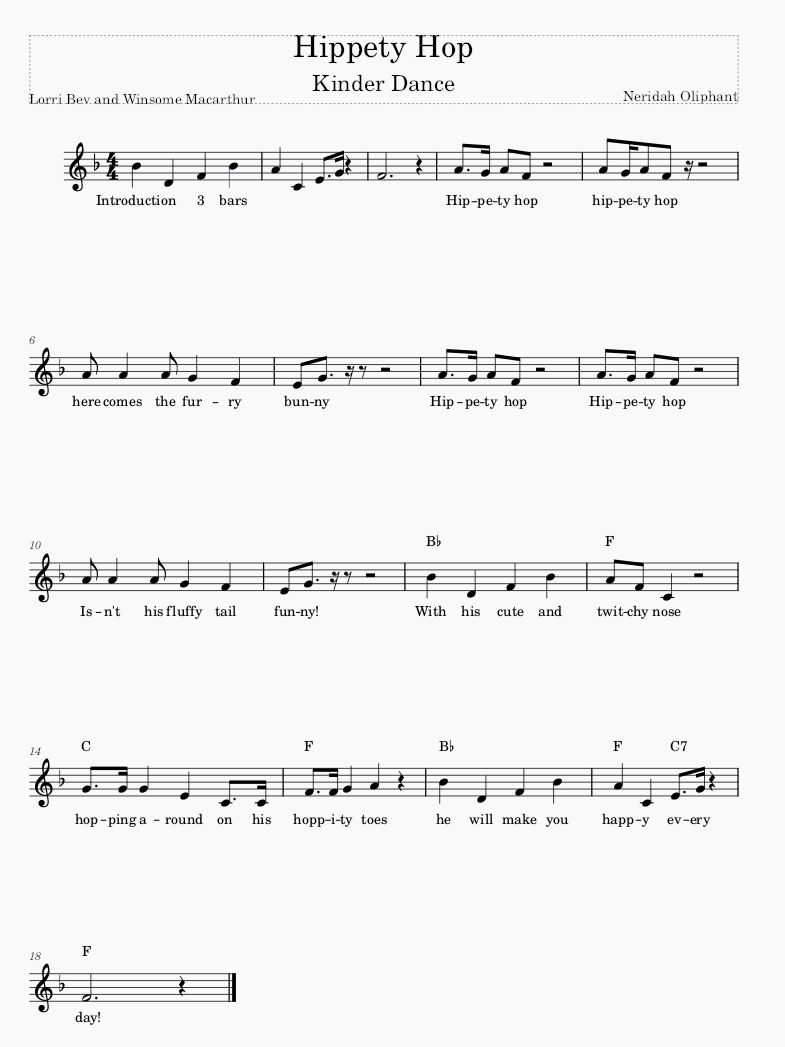
Melody of dance, Hippity hop written by my dear departed friend, Neridah Oliphant.
Songs that build reading prosody
Next, people have been asking about songs that help students build oral reading prosody. I love putting book lyrics to catchy tunes. It is amazing how easily children remember the words of simple songs/ catchy tunes that they draw on during oral reading. With joyful hearts, children break into song during shared book reading, showing us the power of song to spread infectious joyfulness. Piggyback tunes, those timeless nursery rhyme tunes that belong to us all, work equally well as the ones you write yourself. Some of the popular texts I have set to music include…
The Very Cranky Bear (Nick Bland). This tune can be repeated throughout the text. Here is the musical score, recorded in MuseScore, showing the score for each instrument so you can have a class band!
Sing me the Summer (Jane Godwin & Alison Lester). Here is the musical score.
Talk to the Animals series (Alison Lester). There are 4 simple texts in this series. They can all be sung to this catchy tune.
Love from Australia (Ruth Waters). This simple tune, ‘G’day from…’, helps children to learn the vocabulary in the text- Australian place names; prior to reading the text- frontloading vocabulary, setting students up for reading success.
Mr Magee lived under a tree (Pamela Allen). This online Storytime session (30 minutes) provides a guide on how to use music to build reading prosody (and musical concepts)with this wonderful text. Apologies for the drone in the recording. I had some technical issues.
Hooray for Birds (Lucy Cousins). Follow the words in the text that match the melody. It’s one of my favourite creations!
Session 2 of my online course focuses on writing songs to build the Early Reading and Music link.
I’m currently writing a song to accompany Michael Rosen’s latest text, 36 years after ‘ We’re Going on a Bearhunt’, called ‘Oh Dear, look What I Got!’- the song version of the former classic (We’re going on a bearhut) that I’d wager most people remember, a great example of the power of music to support oral reading.
Music creation software for the classroom
Someone asked about tools to help write music with primary students. I feel foolish recommending this to specialist Music teachers; however, I use the free music creation software program, MusScore, because you can add as many electronic instruments as you like, and it reinforces the reading, writing, music link. I say this, and I have now been using MusScore for some time, introduced to me by my Guitar teacher, Stuart, who is a professional musician. It takes a while to get used to the software; however, once you have it mastered, it (usually) works like a dream. Music can be downloaded in PDF and MP3 formats for sharing. Then it’s time for students to follow the scores for their various instruments. and make wonderful music together! See below for an excerpt from The Very Cranky Bear…
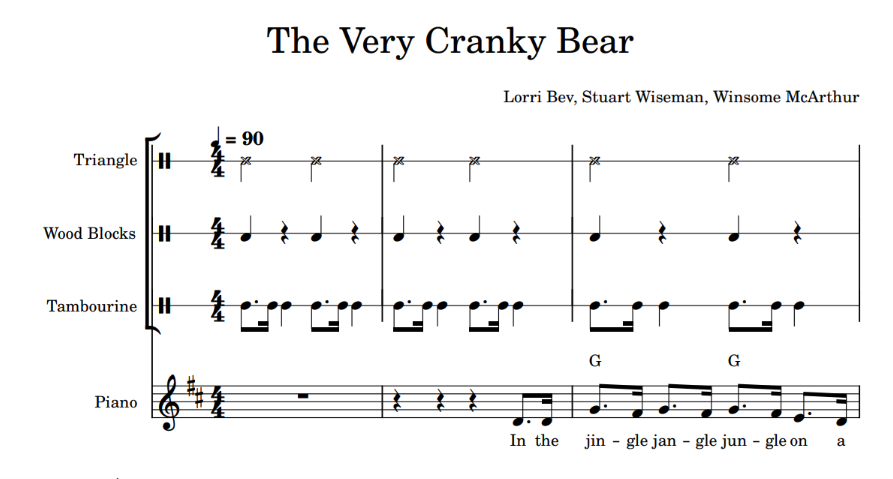
Excerpt from ‘The Very Cranky Bear’ by Nic Bland (created in MusScore).
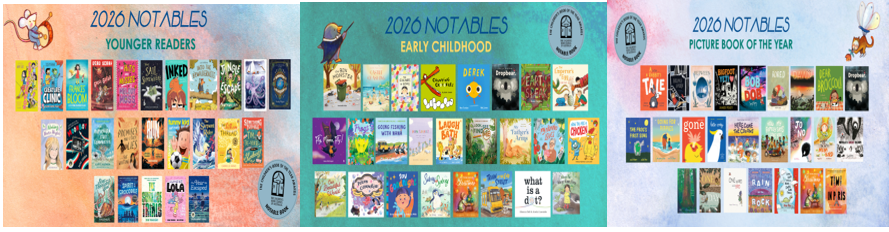
CBCA Notables 2026
CBCA Notables book reviews 2026
I am currently critiquing the 2026 CBCA Notable texts in the three categories above, which are most relevant to my work. I will update my lists on my website as texts become available for review. This week’s reviews are for the texts… Dropbear by Philip Bunting, introducing the legend genre to young children K-2 (Early Childhood). From the younger Readers section, reviews of Seriously Soccer (Matt Stanton) and Chicken Pox, a graphical novel by Remi Lai- both seriously fantastically funny books for Years 3-6. More to come…
Current Research
Running records have been featured prominently in the academic literature over the past few years, and I have found no published work on teachers’ views on the topic. My colleague, Jubilee Smith and I are undertaking some academic research on teacher perceptions of running records and their usefulness as a formative assessment tool in teaching reading. If you have 10 minutes to complete this survey, your views will be heard and valued. Thank you. Here is the link to the survey: https://scuau.qualtrics.com/jfe/form/SV_di11FTUZtGRUqgK
Photo Painted Eggs (Wruestenigel). Creative Commons. foto.wruestenigel.com
