The Arts - Music Advocacy
HELLO! The integration of the arts into curricula is advantageous to students in multiple ways. Research consistently demonstrates that arts integration is beneficial to students because it is associated with improved attitudes and behaviours that positively impact academic achievement. In this blog, I synthesise and briefly outline some recent research on the importance of the Arts in education. Additionally, curriculum links are reviewed specifically to support the Early Reading and Music Partnership.
In NSW, Australia, we have a new Creative Arts curriculum (2024). 2025 and 2026 are targeted for schools to ‘plan and prepare’ (NESA, 2025) to start teaching the new syllabus in 2027. Many schools are wisely implementing the latest syllabus in readiness. The Australian Curriculum V9 (2022) The Arts - Music is similar in that both syllabi focus on how students experience sound through singing, moving, and playing, responding to beat and rhythm through movement and body percussion. Specific links with both state and national English syllabi include developing oral language through rhymes and chants, as well as elaborating on ideas and building vocabulary, among other skills.
In fact, the Early Reading and Music partnership course—now available online for interested early learning centres, schools, and individuals—directly addresses most outcomes and content descriptors in the English curriculum, both state and national versions. https://earlyreadingandmusicpartnership.com/the-early-reading-and-music-partnership-course/
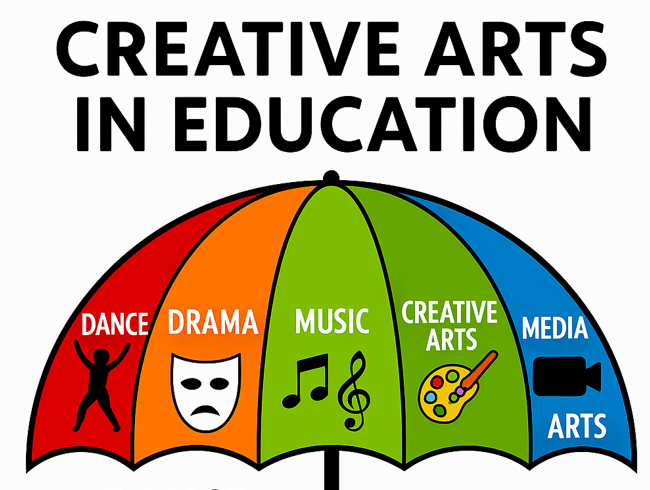
The Creative Arts curriculum has 4 strands (NSW)- Music, Drama, Dance and Creative Arts. The ACV9 has another strand- Media Arts.
.
Some exciting research for teachers
Links to the full texts are provided, should you wish to read the research more fully or share it with colleagues and supervisors. I examined the documents through a practitioner lens and highlighted the main ideas for you, with a view to classroom practice.
How can music assist our ADHD students?
Rhythms of relief: perspectives on neurocognitive mechanisms of music interventions in ADHD
Zhihui & Zhang (2025).
ADHD presents in various ways in the classroom, so having multiple tools in the teaching toolbox is essential. Music—whether listening to or making it—can be a helpful addition to other supports.
Music may be helpful because it can:
Boost engagement and follow‑through in the completion of tasks
Improve a student’s sense of timing and rhythm
Calm or energise, depending on what’s needed, addressing student wellbeing
Reduce drifting attention
Help the brain “sync up” through steady beats (hemispheric synchronisation)
Support emotional regulation
Strengthen connection with others
These ideas originate from ADHD research, as well as what we know from other groups that benefit from music. Matching the type of music activity to the individual’s needs is likely essential. More research is needed, but music therapy looks promising as a way to support both learning and wellbeing in ADHD.
How are learning music and learning to read similar?
(7) The Glorious Music of Balanced Literacy Instruction | LinkedIn In this blog post, Andy Johnson (2025) defends the use of the much-maligned term, ‘balanced literacy’, which he defines simply as ‘balancing skills with opportunities to practice those skills in authentic reading contexts’. All students need numerous authentic reading opportunities, just as musicians need to play real music, not just drills. ’
Andy uses the analogy of re‑learning a musical instrument to show how reading works:
Both music and reading require basic skills, but those skills only become useful through meaningful practice.
Automaticity is essential in both reading and music.
When skills become automatic, the brain can focus on meaning — making music (understanding text).
Early on, Andy struggled because he had to think about each note and fingering — just like a beginning reader sounding out every word.
Practice builds fluency, as repetition strengthens neural pathways. Looking slightly ahead helps with smooth performance (in music and reading). Predicting what comes next supports fluency in both domains.
Real music (like real books) accelerates learning more than drills alone.
It feels more natural.
Skills come together more easily.
It’s more enjoyable, which motivates more practice.
The big takeaway from Andy’s post is that ‘Balanced literacy isn’t drills vs. books — it’s using both, with the ultimate goal of fluent, meaningful reading built through lots of authentic practice.’
How Can Arts research in schools elevate our practice?
This paper articulates the theory-practice divide in relation to arts education in schools. Specifically, it outlines recent reviews by the American Institutes for Research (AIR) that examined how the arts research fits within the evidence requirements of government policy in the US. These reviews highlight four significant gaps that limit how confidently states and districts can make decisions about arts programs:
Research focus gaps: Many art forms or outcomes lack rigorous study.
Population gaps: Existing studies often involve narrow or unique groups, making it hard to generalise findings to other schools or communities.
Recency and reporting gaps: Some data are outdated or not publicly accessible when decisions need to be made.
Mediating‑factor gaps: Little is known about how context—such as program location, student characteristics, or implementation quality—shapes outcomes.
Recommendations:
We need to improve data quality to enhance decision-making and program design. Additionally, we need to advocate for rigorous research partnerships, possibly partnering with independent research organisations that have the expertise and resources to assist.
Overall, more direct evidence is needed. Current findings are promising but inconclusive due to the wide variation in art form, program type, sample characteristics, and context among studies. To inform policy, we need more conclusive evidence about which arts programs are effective, for whom, and under what conditions. These findings are relevant to research informing education policy in the Australian context.
Students make music in the environment.
Wild’ music-making: an investigation into the experiences of children (aged 7–10) when music-making in a woodland (Adams, Smith & Beauchamp, 2025)
This insightful paper outlines the benefits of children making their own music and prioritising what they experience during music-making. It describes ‘wild pedagogies’ (Jickling, 2018), which enable young children to experience a deeper reality of the world. Students reported links to wellbeing, making music outside, in the environment…’It made me feel peaceful, kind and happy. Children felt that creating music outdoors was very different from their usual, human‑centred (anthropocentric) learning environments. The natural setting opened up new ways of perceiving and engaging with the world. Children reported increased imagination and more musical ideas when working in natural environments. Such experiences, in turn, supported and deepened their music-making.
The findings demonstrate that music-making in natural environments can reveal aspects of reality that are often overlooked in Western educational contexts. Such experiences may go towards supporting children in becoming more attuned and responsive to the natural world (Blenkinsop, Morse, & Jickling, 2022). The children also reported an enhanced sense of creativity, noting that their imagination and musical ideas expanded when they were making music in the natural environment.
Overall, the study demonstrates that when children create their own music outdoors, they can access ways of knowing that enrich their creative processes, potentially shaping their long-term relationships with music and the natural world.
Launch of online course for teachers of early reading
Finally, I’m delighted to officially share the Early Reading and Music Partnership’s new online course for schools and early reading teachers. The program is delivered across three sessions, ideally spaced two weeks apart to align with staff meeting times and to provide teachers with the opportunity to trial and reflect on new practices between sessions. Each session runs for one hour and is designed to be both practical and immediately applicable in the classroom.
You’ll find an overview of the course below. I hope it supports your team in strengthening early reading through the joyful power of music. Happy 2026, all! Wishing you much success and happiness!
